You Can’t Leave Busan Without Trying Dwaeji Gukbap
Korea is always a popular travel destination, but among its cities, Busan stands out with a character all its own.
Compared to Seoul, Busan feels more open, more relaxed — a port city shaped by the sea and by everyday life.
If there is one dish that truly represents Busan, it is Dwaeji Gukbap.
Locals often say,
“Coming to Busan without eating dwaeji gukbap is like visiting Japan and skipping ramen.”
It’s not a trend food or a tourist attraction.
It’s the taste of Busan’s daily life.
1. What Is Dwaeji Gukbap?
“Gukbap” (국밥) literally means soup (guk) + rice (bap).
All across Korea, you’ll find many variations — beef-based soups like seolleongtang, spicy yukgaejang, or light bean-sprout gukbap.
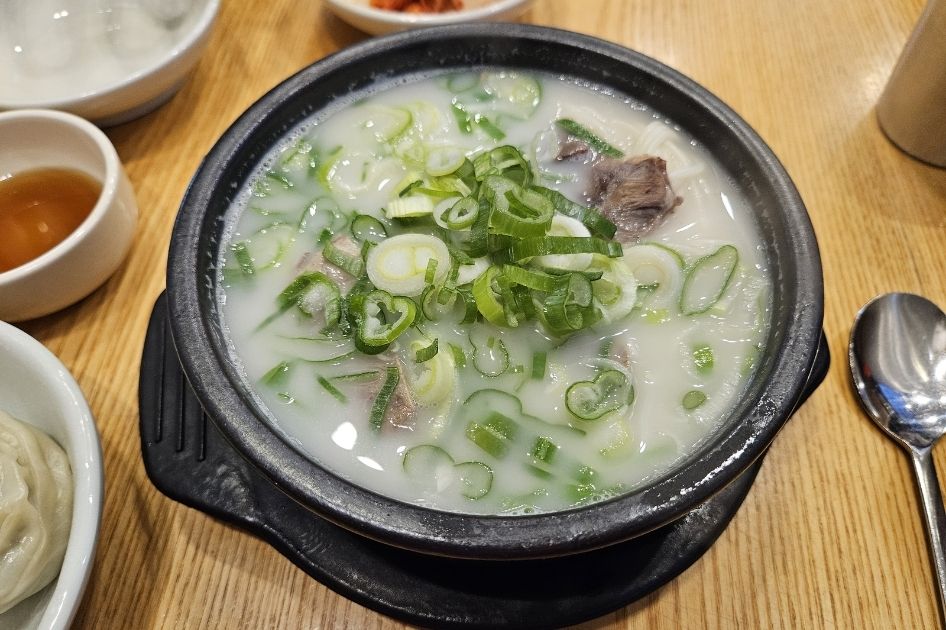
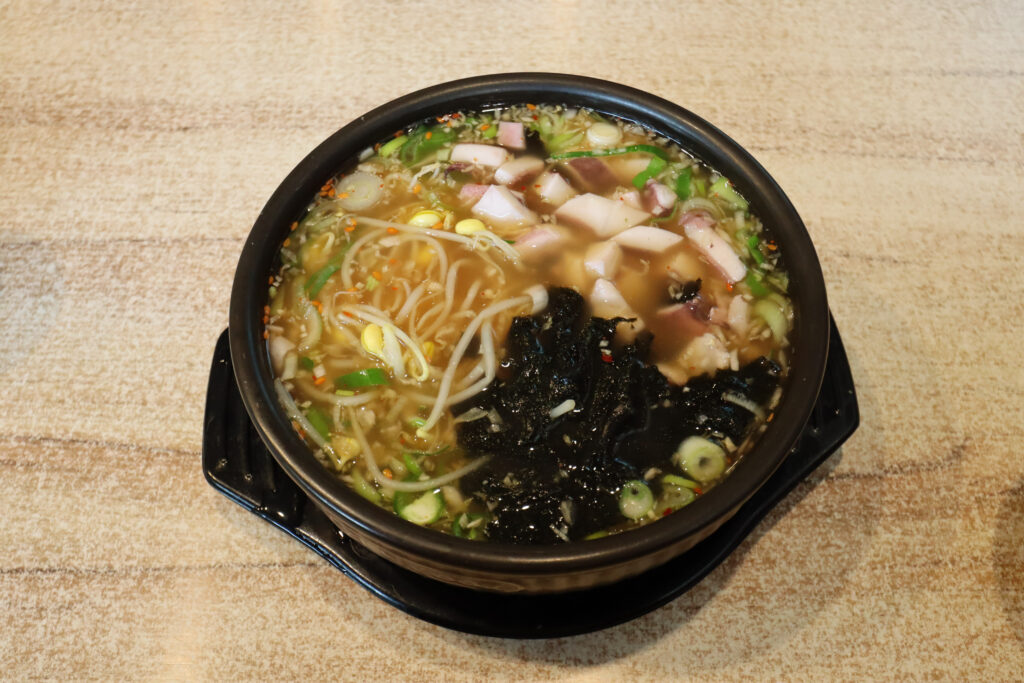
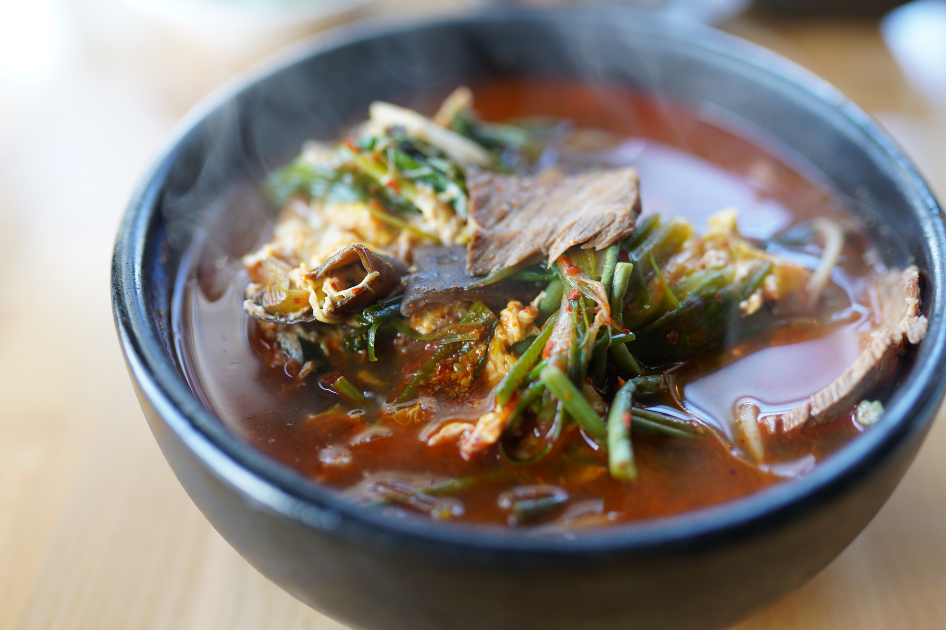
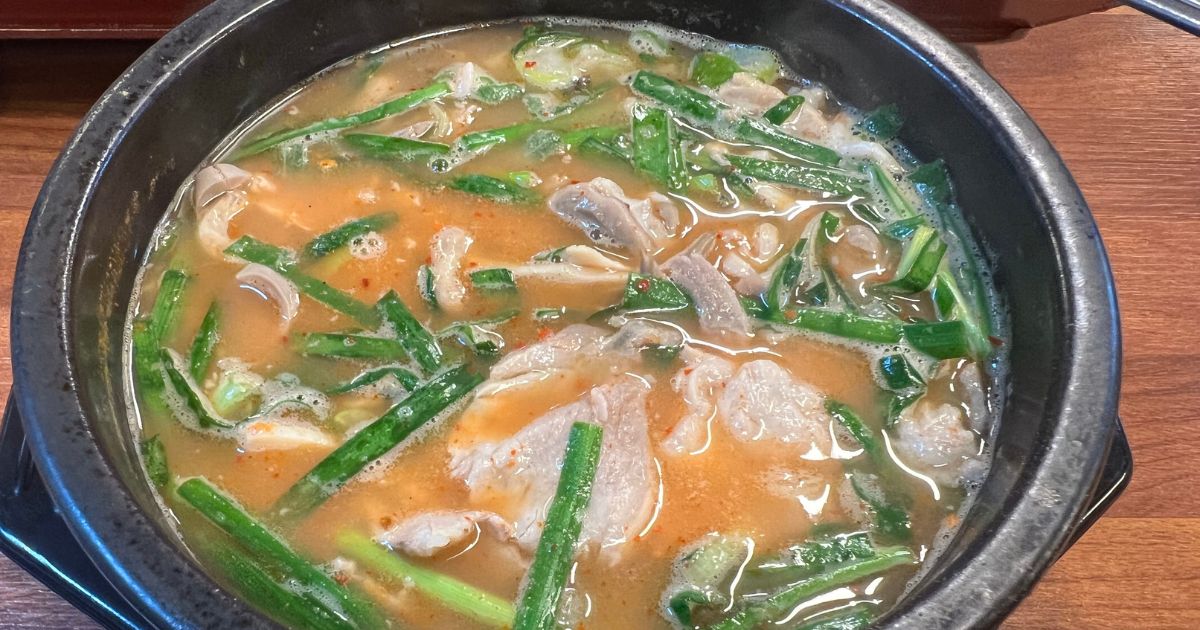
But in Busan, the most common and beloved version is dwaeji gukbap, made with pork.
The soup is created by slowly simmering pork bones for hours until it turns milky and rich.
Slices of tender boiled pork are added, and rice is served either inside the soup or on the side.
If you’re familiar with Japanese tonkotsu ramen, the aroma may feel familiar —
but dwaeji gukbap is milder, cleaner, and meant to comfort rather than excite.
2. Why Busan? The History Behind the Dish
Dwaeji gukbap didn’t become Busan’s soul food by accident.
During the Korean War, Busan was one of the few cities that did not fall, and countless refugees fled there. Food was scarce. Meat was rare.
What people could get — often through U.S. military supply routes — were pork bones.
Using whatever ingredients were available, people recreated memories of home, cooking soups that could feed many mouths at once.
Pork bones, salted shrimp (saeujeot), and time were enough.
Dwaeji gukbap was born not from abundance, but from survival —
and from the quiet desire to fill empty stomachs and keep going.
That spirit of jeong — Korean warmth and care for others — still lives in every bowl.
3. How to Eat Dwaeji Gukbap Like a Local
Walk anywhere in Busan — business districts, residential neighborhoods, university areas — and you’ll find gukbap restaurants everywhere.
When ordering, you’ll usually choose from these options:
Basic Gukbap Choices
- Dwaeji Gukbap
Pork meat with pork-bone soup.
The standard, beginner-friendly choice. - Naejang Gukbap
Made with pork intestines.
Richer flavor, very local. - Seokkeo Gukbap
A mix of pork meat and intestines.
A popular middle ground. - Sundae Gukbap
Includes Korean blood sausage (sundae).
For adventurous eaters.
① The Soup Is “Unfinished” on Purpose
One of the most important things to know:
dwaeji gukbap is served plain, inviting you to season it to your own taste.
The final flavor is up to you.
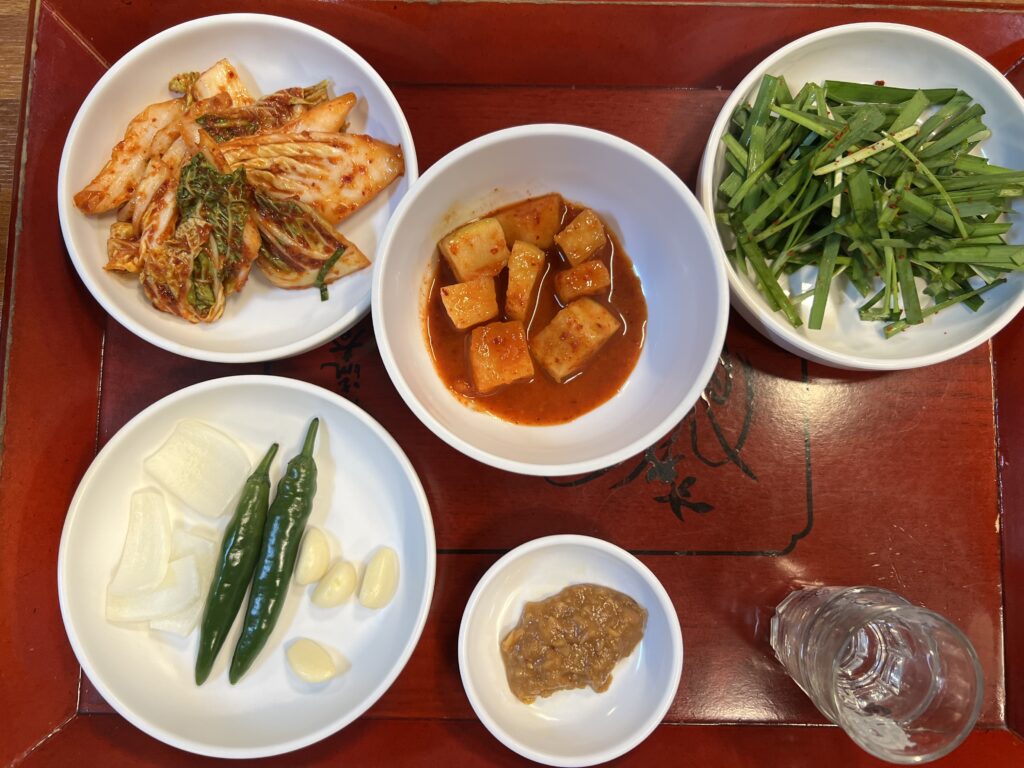
On the table, you’ll usually find:
- Salted shrimp (saeujeot) – adds salt and helps digestion
- Dadaegi – a spicy chili paste
- Chives – a Busan signature ingredient
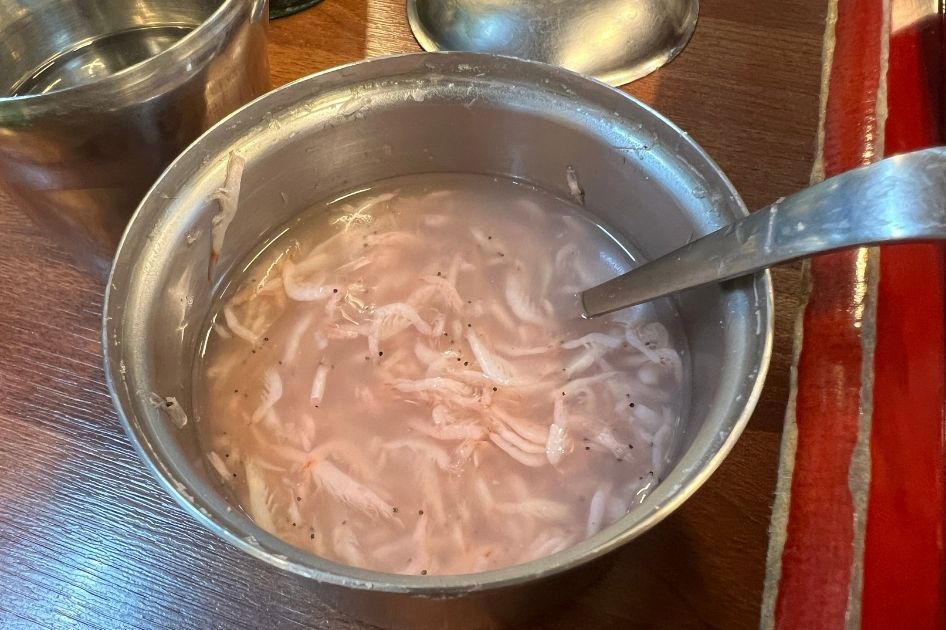
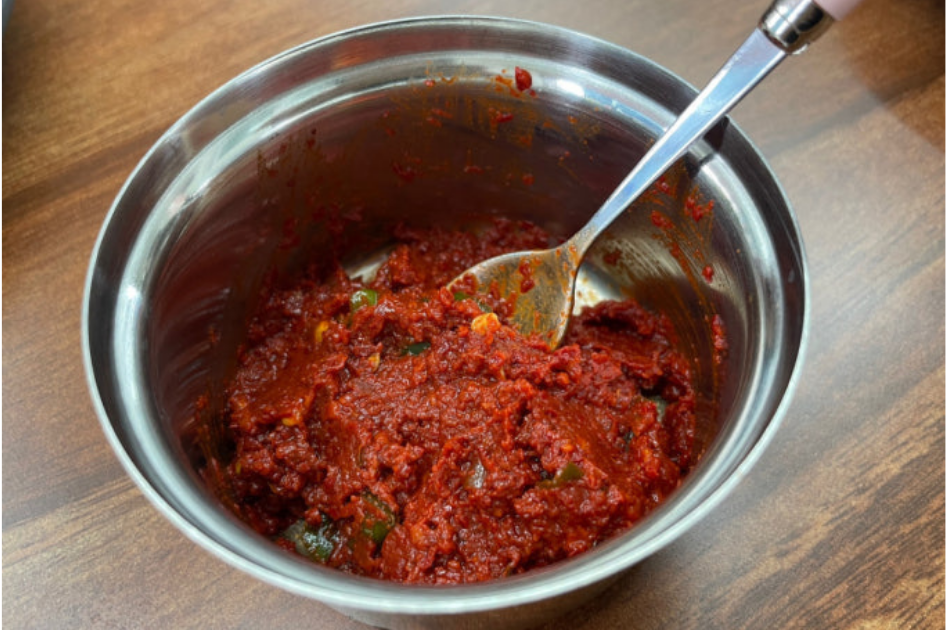
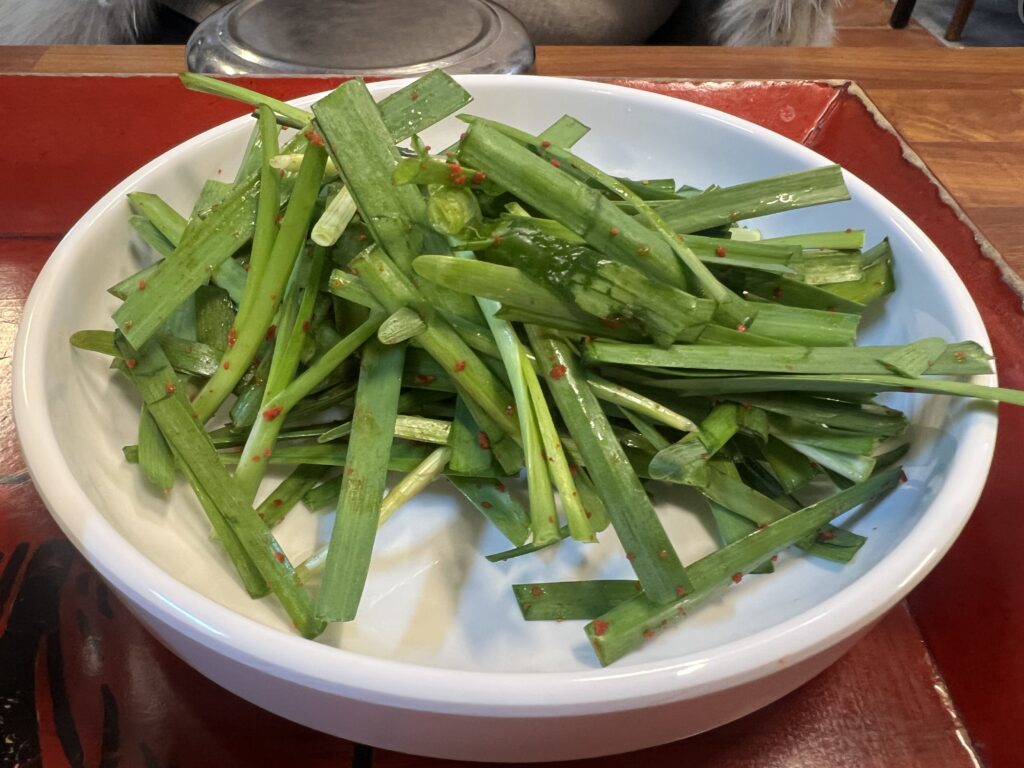
You adjust the soup little by little, tasting as you go.
Tip for travelers:
If you don’t like spicy food, you can say:
- “Dadaegi jogeumman juseyo.”
(Please use only a little chili paste.) - “Dadaegi ttaro juseyo.”
(Please serve it separately.)
This small phrase makes a big difference in your experience.
② Watch Out — It’s Seriously Hot
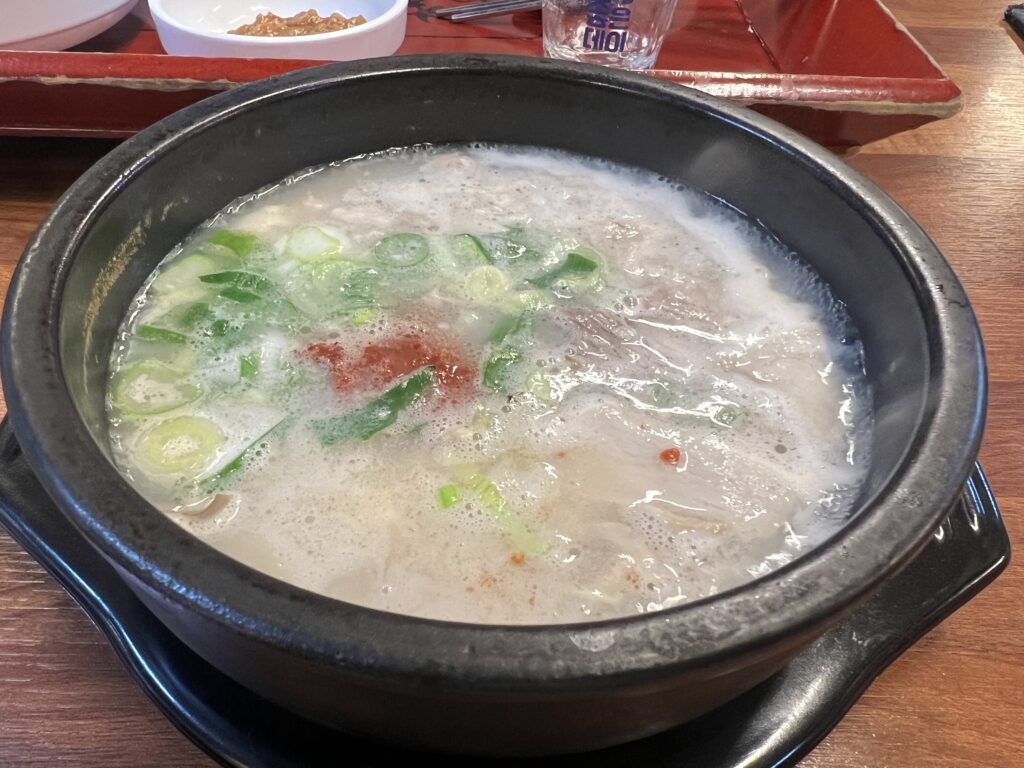
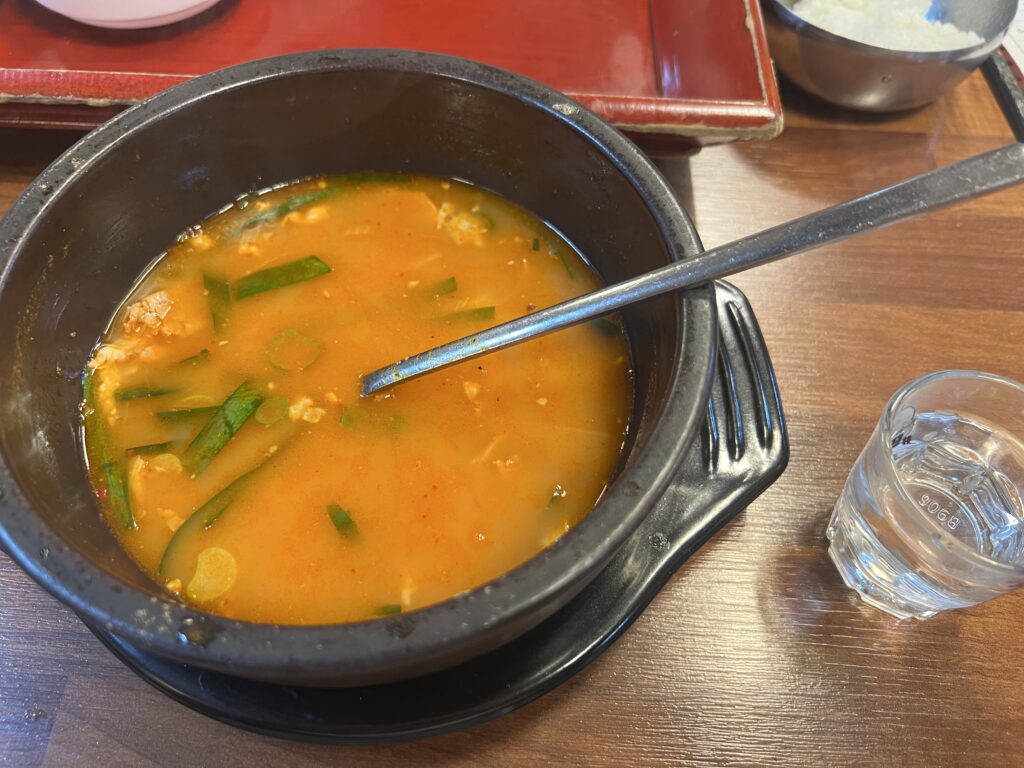
Gukbap is served in a ttukbaegi, a black clay pot placed directly over heat.
It arrives bubbling and stays hot until the last bite.
If there’s foam on top, it’s perfectly fine to skim it off — locals do it too.
Take your time. Blow gently. Eat slowly.
The heat is part of the comfort.
4. A Step Up: Try Suyuk Baekban
If you want something special, order Suyuk Baekban.
Instead of meat inside the soup, the boiled pork (suyuk) is served beautifully sliced on a separate plate, alongside soup and rice.
You can:
- Wrap the pork in lettuce or perilla leaves
- Dip it lightly in salted shrimp
- Then finish by turning the soup and rice into your own gukbap
Interestingly, suyuk is also traditionally served at Korean funerals, offered to visitors as a gesture of respect and gratitude.
Even in sorrow, food is used to care for others.
Final Thoughts: Eating Your Way Into Busan’s Everyday Life
Eating dwaeji gukbap isn’t about checking off a famous dish.
It’s about sitting where locals sit.
Eating what they eat.
And sharing a quiet moment in the rhythm of daily life.
There’s nothing flashy about it.
But it’s filling, warming, and deeply human — especially on a cold day.
When you visit Busan, don’t just see the city.
Taste it.
Your own version of dwaeji gukbap is waiting.